Week 15 That Was : Electricity Production

De Ruyter, Eskom CEO, announced about a week ago that 6 042MW planned maintenance, while another 14 471MW of capacity unavailable due to unplanned breakdowns. This comes at backdrop of a decreasing Electricity generation (production) from 2008 at 22 Gigawatt (GW) / Hour to about 20 Gigawatt (GW) / Hour, Statistics South Africa. Electricity generation is down by 2 gigawatt (GW) or 2000 megawatts (MW) or 2 000 000 kilowatts (kW) from Jan 2008.
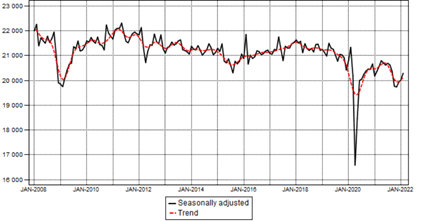
Electricity Generation / Production in South Africa

In context (ignoring technical factors), We would need 11 000 Golf GTIs with power output of 180 KiloWatts (KW) running at the same time to get electricity production / generation of Jan 2008.
The Week 14 That Was : Zero Rated Education Content

About 750,000 children may have dropped out of school due to COVID-19 Pandemic according to Khaya Mlamba of the Global Citizen. Telecommunications operators who won bids in South Africa’s recent broadband spectrum will be required to zero-rate all mobile content provided by public benefit organisations. The outcome of the spectrum is still to be announced after a settlement with Telkom is finalized.

Zero-rated websites provide content that people can download at no cost on their own cellphones. This could be content from schools, libraries and other public institutions.

Could zero rated mobile content have helped some of the 750,000 children? Could this content have been on YouTube ?  

The Week 13 That Was : Case against Paraffin

About 3.6% of South Africans still rely on Paraffin as a source of energy. This is about 2 million people.  The human costs of this cheap energy source are enormous. Paraffin is used as an energy source of choice where electricity and coal are not accessible. An average user burns about 5 litres per month.  The maximum retail price at which Illuminating Paraffin, excluding cost of package, may be sold at R 15,29 which will mean R76,45 per month.

In “The Week 5 That Was” I showed that a household would need about R83.33 per month in electricity bill to keep a (300 – 400) Kw-hours fridge running for the full month. A pensioner’s grant is around R1 890 per month. This would mean that 4% of the grant would go into energy source.

It makes a case against the use of Paraffin as source of energy very difficult.

Challenges in household energisation and the poor (scielo.org.za)

Week 12 That Was : Age at Marriage

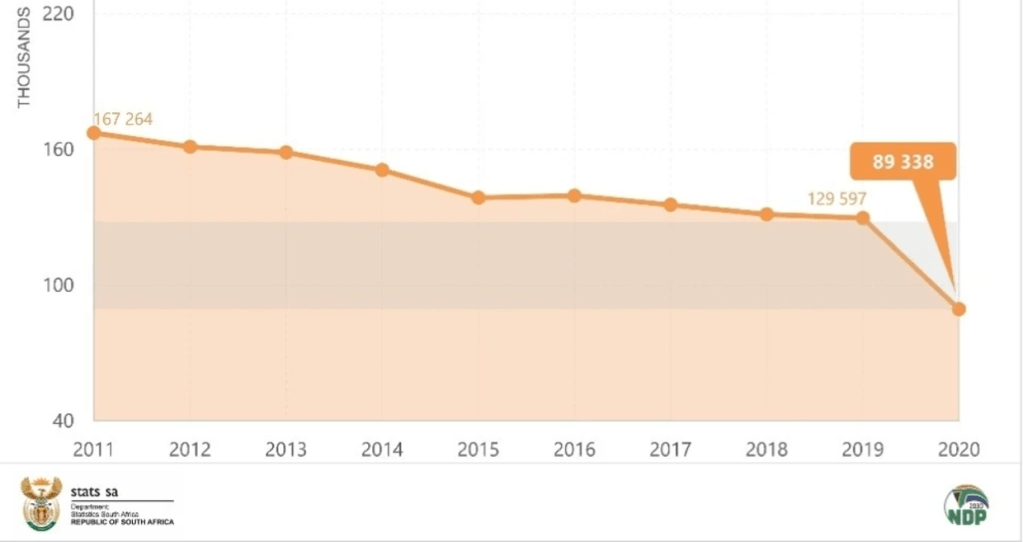
According to Statistics South Africa, the were total of 89 338 civil marriages, 1 585 customary marriages and 1 471 civil unions were registered in 2020. The comparison shows that less more people are getting married compared to 2019. What is interesting is that an average person is getting married at 37 years, the number jumped from 33 in the previous year.

For illustrative purpose, newly weds would be starting families at age 37. It would mean that they would be 58 year of age to get a child through school up to finishing a 3 year degree (18 Years + 3 Year Varsity). It would more or less the time they have finished paying off a 20 year home loan.

These newly weds would be facing retirement, health care costs, etc.

Its a conundrum.

Click Here to read more.

Week 11 That Was : Water Tariffs

Access to free basic water consists of at least a basic amount of 6 kl (6 000 l) of water per month per household. For those that qualify , usage greater than 6 kilolitres and up to 10 kilolitres is charged R20.28 per kilolitre per month. The bill would approximately be (10 Kiloliters – 6 Kiloliters ) Multiply by R20.28 which is approximately R80 per month.

It is estimated that a not- waterwise family could use upto 775l of water daily. This implies that they could use 23,25 kiloliters of water per month. In excess of 20 kilolitres up to 30 kilolitres is charged at R38.98 per kilolitre per month. The water bill would approximately be (23, 25 Kiloliters – 6 Kiloliters ) = 17 Kiloliters multiply by R38.98 which is R662,66.

Use water wisely

Week 10 That Was : Food Costs

The Household Food Basket in the Household Affordability Index was designed together with women living on low incomes in Johannesburg, Cape Town, Durban ,Springbok and Pietermaritzburg (Pietermaritzburg Economic Justice and Dignity (PEJD)). It is considered a reasonable indicator for a food basket which includes important typical foods households try and buy each month. Data from this is collected from 44 Supermarkets and 30 Butcheries to track the average increase of the food basket.

The household basket is at R4 355,70 per month which is higher than the average salary of a General Worker which is R3 470,40 per month . PEJD estimates that a domestic worker earn about R3 054,40 per month. The same basket has increased by R354,52 per month from previous year (2021). This excludes all other expense such as travel, school fees, health care, etc. In previous weeks I have written about the impact of increase in petrol price and electricity which hasn’t been factored in yet.

The situation sounds dire.

Click here to read the full report

Week 9 That Was – Russia and Ukraine -Effects on Stock Exchange

The Johannesburg Stock Exchange (JSE) all share index dropped by 4.85% to 72,685 points from last week Wednesday. The JSE all share index is a number of all listed companies on the Johannesburg Stock Exchange. I am leaving out all the other complexities of whether it is a correct way or not. Some argue that this due to what is happening between Ukraine and Russia.

Let’s assume that you have R 72,68 (JSE All Share Index) today and you are told that your money has lost value by 4.85%. It will mean that you have lost R3,52 in seven days. On Wednesday morning you will only have R69,15. You might be exposed to this loss if you have pension fund, retirement, retirement annuity or unit trust.  Mainly because most of the fund managers and investment companies buys the same shares which are listed on the stock exchange on your behalf.

Should you care? I do not know!

Week 8 That Was : Petrol Price

Petrol price is R 20.19 liter from R 18,73 per liter. It has increased by R1.46 at Tuesday midnight. Then what does it mean? It is estimated that each minibus taxi does about 6 000 kilometers per month or 72 000 kilometers per year. It is like going from Pretoria and Cape Town four (4) times. It is about 120 trips from Pretoria to Johannesburg. I am assuming the distance of 50 kilometers between Pretoria and Johannesburg.

A mini bus taxi use 11.8 liters for every 100 km which about normal for any car. This means that it needs 708 liters of petrol to do 6000 kilometers per month. It is calculated as follows (11.8 x 6000)/ 100 to get the number of liters for 6000 kilometers. We then multiply the 708 liters by R1,46 which becomes R 1033,68. The taxi owner has to have additional R1033,68 to run his taxi.

Who is going to pay for the R1033,68?

.

The Week 7 That Was : 10 Gig Free Data

Communications Minister Khumbudzo Ntshavheni announced that each South African family would get 10Gig of free data per month. The truth is that modernization of economies comes with adoption of technology(Data). Cell C data prepaid packages seems to be the cheapest at R139 per month. It is estimated that there are 17.16 million households in South African. It would costs government R2,3 Billion a month on a Cell C Network alon.

But then what can you do with 10 Gig of data per month. It would allow you ten hours of Netflix, 60 hours of YouTube or listening to 2,000 songs. The viewing time is reduced when multiple devices are connected. On the other hand quantifying the overall benefits of data access is very difficult. Impoverished communities can start adoption mobile technologies such as Pocket Doctor (WhatsApp Calls), Home Deliveries (Checkers 60Sixty) and Online Schooling (Free Learning Material).

The benefits could out way if implemented well. Having said that, the are other social problems to deal with. Maybe some of the solutions require this intervention.

The Week 6 That Was : Education

Only one (1) in four (4) grade 4s CAN read for meaning in any language. Reading for meaning implies that learners can focus on discussing and understanding what they are reading, not just pronouncing the words correctly. This is according to 2030 Reading Panel lead by by former deputy president Phumzile Mlambo-Ngcuka (https://www.readingpanel.co.za/.)

The COVID19 pandemic and lockdown regulations had a negative impact that 10 year old’s in 2021 knew less than 9 years old before the pandemic. Access to reading material is hard to come by. Grade 1-3s in no fees school have access typically to only one reading resources which is their workbook. The panel recommends standard set of reading resources to all foundation phase. The problem is exacerbated by the fact that 45% of current teaching staff will be eligible for retirement in 10 years.